If you tuned in to read my post about hitters that were snubbed for the 2025 MLB All-Star Game, then you knew this was coming. Lots of great firepower was left off the rosters this year, in favor of names like Tarik Skubal, Paul Skenes, and Edwin Díaz, to name a few. For the pitching side, I went above and beyond what I addressed for the hitters.
My ‘All-Star Rating’ Logic
Before we get into who I believe were the five biggest pitcher snubs of the 2025 All-Star Game, let’s dissect what went into my analysis.
Why this isn’t every pitcher – To keep my first spreadsheet project manageable, I built a short-list: every pitcher who actually made the initial roster plus anyone who, in a FanGraphs scan, carried All-Star-caliber advanced stats.. That means a few fringe names never entered the model—but every truly compelling omission did. Asterisks (*) mark those who did not initially make the All-Star rosters.

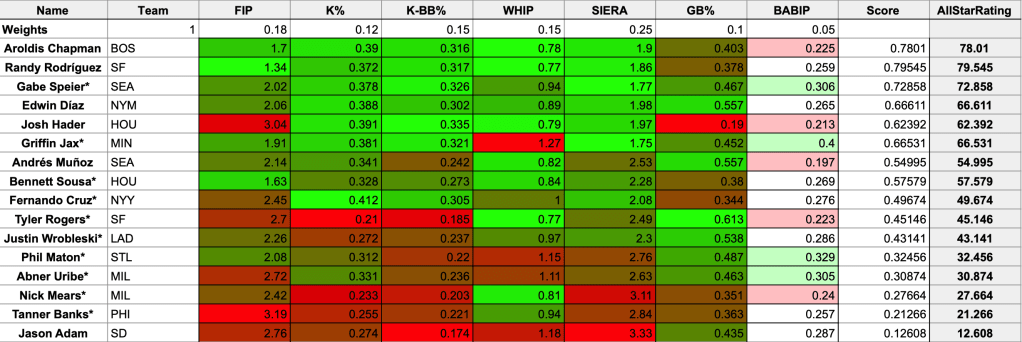
Seven statistics were used to create an overall ‘Score’ which ranged from 0 to 1 and promptly multiplied by 100 to give us the pitchers’ ‘All Star Rating.’ Those statistics differed slightly between starters and relievers. For Starting Pitchers, ‘Score’ was determined using numbers like FIP (Fielding-Independent Pitching), SIERA (Skill-Interactive ERA), K-BB% (Strikeout Minus Walk Percentage), WHIP (Walks + Hits Per Inning Pitched), ERA (Earned Run Average), GB% (Ground Ball Percentage), and BABIP (Batting Average on Balls In Play). For Relief Pitchers, ‘Score’ was determined using FIP, K% (Strikeout Percentage), K-BB%, WHIP, SIERA, GB%, and BABIP.
Each pitcher’s number was first converted into a percentile within the pool of pitchers, which was then multiplied by the assigned weight to that statistic. For example if a starting pitcher had a FIP in the 85th percentile, that percentile would be converted into a decimal, 0.85, and multiplied by the weight of FIP, 0.25, resulting in the ‘FIP score’. All statistics’ scores would be added up into the overall ‘Score’ and then multiplied by 100 to get the ‘All Star Rating’.
I determined the weight of each statistic by my own evaluation of the ‘importance’ of the statistic. With starting pitchers, I weigh SIERA and FIP as the two highest statistics as they are the most predictive and far more accurate than ERA. With relievers, I value highly FIP, WHIP, and K-BB%, as I see those as key statistics for relievers.
For starting pitchers, Tarik Skubal (AL) sets the gold standard at 95.79. For relievers, Randy Rodríguez (NL) and Aroldis Chapman (AL) are having phenomenal first half, with scores of 79.55 and 78.01, respectively.
Without further ado, let’s get into the five arms I conclude were the biggest snubs of the 2025 All-Star Game for pitchers, based on the numbers.
The Five Most Deserving Snubs:
Only pitchers not on the first-release rosters qualify here; injury replacements don’t count.
1. Joe Ryan, SP, Minnesota Twins (AL)

All-Star Rating: 64.33
Outpacing All-Stars like Jacob deGrom, Max Fried and Yoshinobu Yamamoto in Rating, Joe Ryan’s All-Star case won’t jump out at you off the screen, but his numbers tell a story of extreme efficiency.
A 0.89 WHIP ranks third in the MLB behind only Tarik Skubal and Zack Wheeler and his 23.4 K-BB% ranks fourth behind the same duo and Garrett Crochet. His 3.08 SIERA sits at 7th in the majors, outranking guys like MacKenzie Gore and Paul Skenes of the NL, but more importantly Jacob deGrom and Max Fried of the AL. Add in a 2.76 ERA and a .192 AVG Against and Ryan gives you exactly what you want from a #1 or #2 guy on a playoff team, except an All-Star jersey apparently.
2. Sonny Gray, SP, St. Louis Cardinals (NL)
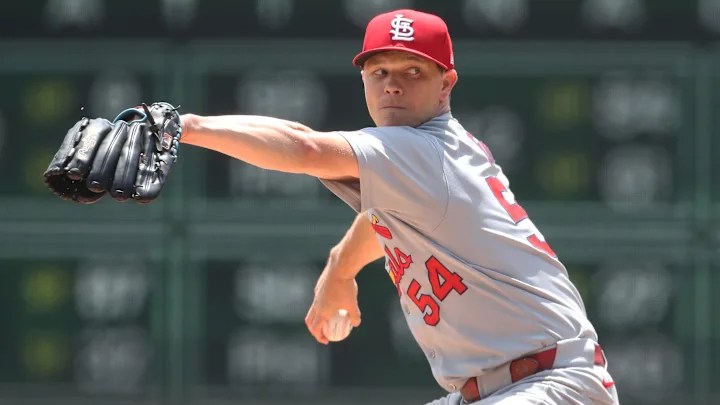
All-Star Rating: 62.35
Sonny Gray has quietly been dominant in first two seasons with St. Louis.
His 2025 numbers have been loud: 2.80 FIP, 1.09 WHIP, and 22.4 K-BB% paint a picture of run limitation and an ability to keep hitters off base. Not to mention his 4.5 BB% is the lowest walk rate of his career. His 62.35 All-Star Rating ranks above NL All-Stars like Yamamoto, Gore and Matthew Boyd, so it gives the impression that Sonny may have disrespected by the voters a bit because of his 3.51 ERA.
If consistency counts, Sonny Gray would’ve been booked on a flight to Atlanta.
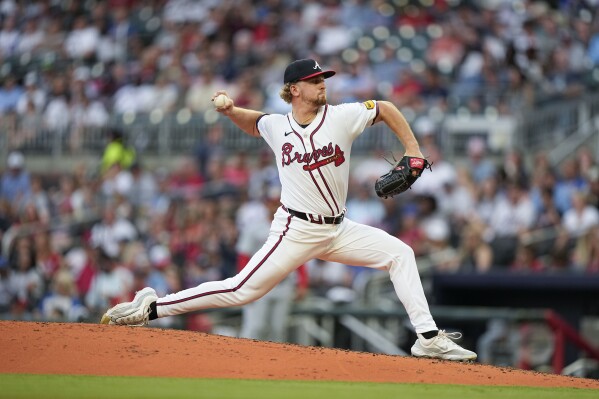
3. Spencer Schwellenbach, SP, Atlanta Braves (NL)

All-Star Rating: 55.46
The Braves have struggled this year and, at the time of this writing, sit at 40-52, and Schwellenbach recently suffered a small fracture in his elbow that will keep him out for an extended period of time, but that should not factor into being snubbed from the recognition of being named an All-Star.
He hasn’t been on the front page of national headlines, but perhaps he should have. Schwellenbach built on his rookie season with a first-half 0.97 WHIP and a solid 20.7 K-BB%, keeping the Braves’ rotation steady through a multitude of injuries to rotation-mates Spencer Strider, AJ Smith-Shawyer, and Chris Sale. Schwellenbach’s 55.46 All-Star Rating ranks him higher than 6 NL All-Stars.
Despite his injury, Spencer Schwellenbach was given the short end of the stick by the voters by not being given the proper credit for keeping the Braves afloat.
4. Gabe Speier, RP, Seattle Mariners (AL)
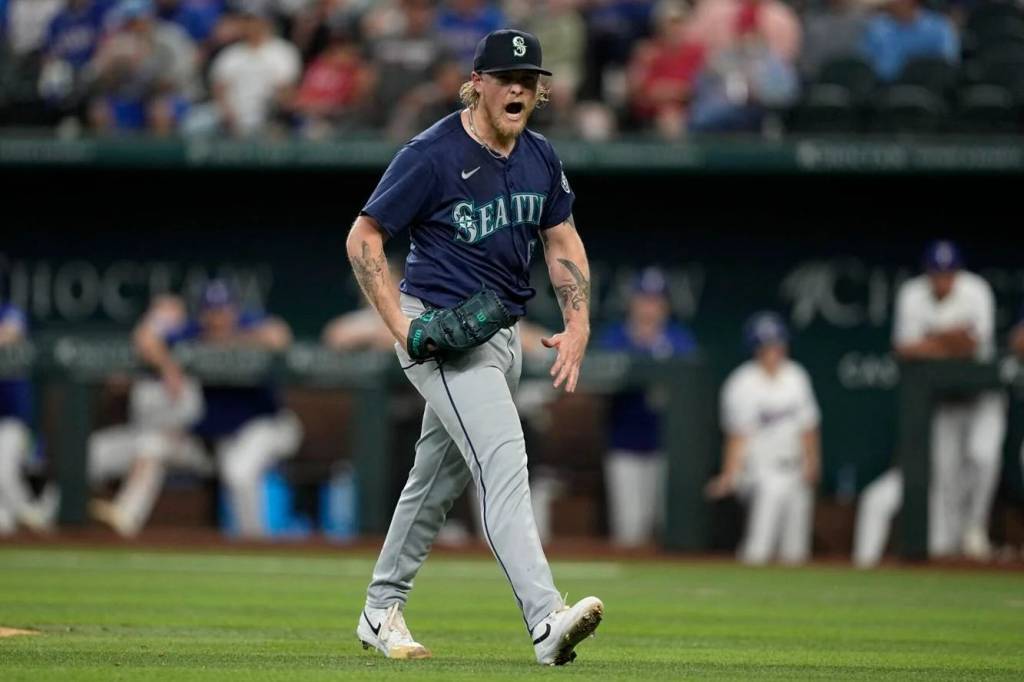
All-Star Rating: 72.86
Perhaps the most glaring miss from the voters was Seattle reliever Gabe Speier, who held the third-highest All-Star Rating of any reliever at 72.86, trailing only Aroldis Chapman (78.01) and Randy Rodríguez (79.55).
Speier has the second-highest K-BB% at 32.6% behind Josh Hader (33.5%) and second-lowest SIERA at 1.77 behind Griffin Jax (1.75). In all, Speier is striking out 37.8% of batters and keeping runners off base with a 0.94 WHIP. When hitters do manage to put balls in play against him, Speier induces ground balls at a rate of 46.7%, which ranks 6th in my dataset. What’s more is that Speier’s teammate Andrés Muñoz was selected to the All-Star Game, but lags behind Speier in FIP, K%, K-BB%, SIERA, and holds a BABIP of .197. Speier’s BABIP of .309 suggests there may even be luck going against him!
Speier holds a lead on Muñoz in All-Star Rating by 17.86, yet the former will be watching the latter represent the American League this weekend. Make it make sense.
5. Griffin Jax, RP, Minnesota Twins (AL)

All-Star Rating: 66.53
The second Minnesota Twin to be featured on this list, Griffin Jax brings a strong case to baseball fans. Jax has brought great stuff and has partnered it with great control. A 38.1 K% and 32.1 K-BB% shows the extreme discrepancy between the two rates and his ability to throw effective strikes.
Despite having the worst FIP of the dataset, Jax actually holds a strong 1.91 FIP and 1.75 SIERA, the best SIERA in the league! He’s also had to deal with a .400 BABIP, pointing to the Twins having one of the worst defenses in the league, which is backed up by their total -25 DRS (Defensive Runs Saved).
All in all, Griffin Jax has been fantastic this first half, but not every reliever will be chosen to represent the league, especially when there are only three spots.
Final Words
Numbers aren’t everything, but they’re really damn convincing. The case of Gabe Speier befuddles me, especially when his bullpen-mate got the nod. Curious why I weighted SIERA over FIP? WHIP over GB%? Feel free to ask or constructively critique my ways in the comments below. I’m always looking to improve my models and become a better analyzer of data.
I am by no means an expert, but I have strong reason to believe these arms are criminally under-appreciated in 2025. Here’s hoping the second half (or next year’s ballot) gets them that recognition they deserve.
-QG
 Inner Half