“It was just another loss, and that is no good.” – Harvey Haddix
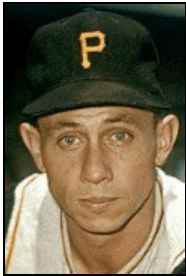
A traditional perfect game sees a pitcher retire 27 straight batters in a single game. Harvey Haddix retired 36 batters in a row in a single game. The game also marked Haddix’s 3rd loss of the season.
The perfect game is perhaps the single greatest accomplishment any pitcher can achieve. A perfect game is defined on Baseball-Reference’s website as “a complete game pitched without a runner reaching base either by hit, base-on-balls, or error. It is one of the rarest feats in baseball and a subset of no-hitters.”
The thing about perfect games is this: they tend to last 9 innings, the default length of a baseball game, because the pitcher’s teammates on offense have scored at least one run. In the case of Harvey Haddix, he was forced to exceed 9 perfect innings.
For a team to succeed, it needs the successful execution of all its parts. There are great debates in sports about “the greatest player” to play the game. Whether it’s football, baseball, or perhaps most commonly, basketball, the greatest, most successful players attribute most, if not all, of their success to their teammates, for good reason. To give you an idea of the importance of team context, allow me to tell the story of the game where a 33-year-old southpaw from Ohio threw 12 “perfect” innings, and was given nothing to show for it but a loss.
May 26, 1959 – Milwaukee, Wisconsin
When the Pittsburgh Pirates traveled to Milwaukee to take on the Braves in 1959, Harvey Haddix proved why individual excellence is not always rewarded in sports history.
The 33-year-old southpaw Harvey Haddix, who was battling an illness before the game, was leading the 21-19 Pirates to what they hoped would be their 6th-straight victory, this time against the 23-14 Braves. Led by two of the three eventual MVP finalists and future Hall of Famers Henry Aaron and Eddie Mathews, the Braves were likely to give Haddix trouble.
The resulting performance from Haddix flipped that narrative on its head. After 9 innings, he was perfect: 27 batters faced, 27 outs on 0 hits allowed, 0 walks given up, 0 runs allowed, 8 strikeouts. 9 of those 27 outs came on groundouts and 1 came on a pop fly. So when he wasn’t striking hitters out, he was doing a great job at forcing poor contact and getting routine ground balls. Haddix was lights-out. A notable wrinkle written from the Society of American Baseball Research is that the Braves knew what pitches Haddix was going to throw, as they were stealing signs from their bullpen thanks to the Pirates’ catcher Smoky Burgess exposing signs with his setup.
His supporting cast on offense was not. 8 hits through 9 innings yielded no runs of their own. The best chances to score were with runners on the corners (runners on first and third base) with 2 outs in both the top of the 3rd and top of the 9th. The players at bat flied out to left field and grounded back to the Braves’ pitcher, 1957 World Series MVP Lew Burdette, a great player in his own right.
Haddix had been incredibly efficient with his pitch count, throwing just 78 pitches through 9 innings, making it an incredibly obvious decision for Pirates manager Danny Murtaugh to send him back out for extra innings. The offense had to get one across sooner than later, right?
Wrong. Haddix would pitch 3 more perfect innings. He got Del Rice (flyout), Eddie Mathews (flyout), and Hank Aaron (groundout), the 1-2-3 hitters in the Braves lineup, out in the bottom of the 10th. In the 11th, Joe Adcock (groundout), Wes Covington (lineout), and Del Crandall (flyout) failed to break the trend. Finally, in the 12th, Andy Pafko, Johnny Logan, and Lew Burdette were retired to make it 12 perfect innings for Harvey Haddix. In today’s baseball world where pitchers that last more than 6 innings are celebrated, this is a now-unimaginable, legendary feat.
Just 4 singles from the Pirates offense from the top of the 10th to the top of the 13th kept Pittsburgh from getting a single runner to at least second base and kept them scoreless. The score remained 0-0 heading to the bottom of the 13th inning.
Harvey Haddix’s perfect game came to an end in the 13th inning. Braves’ pinch-hitter Félix Mantilla hit a ground ball to Pirates’ third baseman Don Hoak, who threw the ball in the dirt, missing first baseman Rocky Nelson’s glove and allowing the first base runner of the game for the Braves. The next batter, Eddie Mathews, dropped a bunt, sacrificing an out so that Mantilla could move up to second base, and give Hank Aaron a chance to win the game. Haddix smartly intentionally walked Aaron, gifting him first base and bringing Joe Adcock to the plate.
What happens next is an obscure detail in such a story, but noteworthy nonetheless. A hanging slider from the left hand of Harvey Haddix was pounded by Adcock over the right-center field wall, driving in 3 runs, earning the Braves a 3-0 win. Though, in actuality, it wasn’t a 3-0 win. Aaron, who was the runner on first base when Adcock hit his game-winning home run, trotted off the field from the infield to the dugout because he assumed the game was over and done. Adcock eventually “passed” Aaron’s last spot on the basepath while rounding the bases. Because of the confusion, the Braves were penalized for Adcock passing Aaron and Adcock was officially given a double, instead of a home run, making it a play that only scored one run. And so 1-0 it was. The Braves, regardless of the final hit’s strange scoring, had broken the spirit of the Pirates, their fans, and, most of all, their starting pitcher Harvey Haddix.
It takes a team: a truth not limited to baseball.
10 years and a day ago was Super Bowl 50. The Denver Broncos took on the Carolina Panthers in San Francisco, the same venue as this year’s game. The 6-foot-5 and larger-than-life Cam Newton was the beloved Panthers QB, and he was facing one of the greatest QBs of all time, the Broncos’ Peyton Manning. It would be Manning’s last game ever.
The 39-year-old future Hall of Famer threw 9 passing touchdowns (TDs) and 17 interceptions in the 2015 regular season. He missed 6 games to a foot injury, yielding the starting spot to a young Brock Osweiler. He was a shell of his former MVP self, understandably. His Denver Broncos had made the Super Bowl on the back of a defensive unit that, through 16 regular season games, allowed the fewest total yards (4,530) and the 4th-fewest points per game (18.5), while ending drives with a turnover 4th-most in football (12%). Whether or not you care about those numbers, they made a difference in how Peyton Manning’s career ended.
Peyton’s Super Bowl 50 statline read 13/23 (completions/attempts), 141 passing yards, 0 passing TDs, 1 interception, 5 sacks taken, 2 fumbles, one of which was lost to Carolina. The Broncos defense, on the other hand, forced 4 turnovers off the Panthers, including an interception and 3 forced fumbles, 1 of which was brought back for a Broncos touchdown. The Broncos were crowned champions of the NFL after their 24-10 victory in Super Bowl 50 over the Panthers.
In terms of on-field production, Peyton Manning did little to earn his team a win. He was picked up by his legendary defense and did just enough to help the team prevail.
Harvey Haddix will forever be under-remembered by casual fans, even if historians of the game try to keep his achievement alive. He won’t be enshrined with the likes of Don Larsen, Sandy Koufax, Randy Johnson, or Félix Hernández, because he didn’t win the game. When he’s remembered, it’ll be for his “failure” to finish the job he started, or to serve as a lesson for sports watchers like ourselves.
Some of the greatest players and performances are let down because of the performance of the rest of the team. One man or woman cannot do it themselves, even for one game. Let this be the prime example of the importance of building a strong, balanced team that makes up for others’ weaknesses with their own strengths. Let’s not forget Harvey Haddix’s “perfect” game.
 Inner Half